
Cold truths
The strange cycle that keeps our fingers alive

A great many reactions happen to the human form when it is exposed to deep cold. Among the body’s many cold-weather defenses, one of the most elegant is the hunting response — a built‑in rhythm that alternates blood flow to protect the fingers from freezing while still conserving heat.
I first learned of this phenomenon – not through personal experience – but in reading the lives of the Inuit peoples while I was working on a book that became the history of canoeing. Old photographs and grainy video of Inuit hunters revealed that the locals often worked in their hunting kayaks without gloves, which puzzled me – adaptability to the cold being a factor, perhaps, but their bare hands took it to an extreme. Laborers in other cultures who toil in extreme cold, such as Scandinavian fishermen, experience the same thing.
Vasoconstriction is the term for the narrowing of blood vessels; in extreme cold, it happens first, to reduce heat loss. Vasodilation is the widening of the vessels, which increases the blood flow and occurs a few minutes later. The two then alternate to keep the fingers healthy and functional. Sometimes this response is written as hunting reaction.
I stuck my hand in an ice water bath to see if it works for me. I got numb fingers, and my experiment had a sample size of one since it was damn unpleasant. A 2007 study, which I should have read earlier, supported the theory that vasodilation is “not trainable over repeated exposure.” A 2024 study, conducted over five weeks of exposure, confirmed the earlier work.
These results – and evidence supplied by Norwegian fishermen -- made scientists wonder if genetics plays a role, but no conclusions have been reached. Is it adaptation or acclimatization?
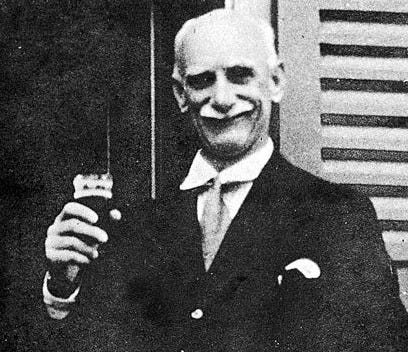
The fellow who first identified hunter response was a Welsh physician named Sir Thomas Lewis. In fact, you might see the phrase Lewis reaction in the literature if you really take a deep dive on a cold winter’s night. Lewis, who worked at University College Hospital in London until he died in 1945, made himself an expert on the functions of the heart, including blood pressure and the pulse. He hated the term cardiologist, however, preferring to call himself a cardiovascular disease specialist.
Using a Dutch inventor’s machine, Lewis pioneered the use of the EKG (electrocardiogram) machine in clinical work starting in 1908, among many other accomplishments. By 1930, he had identified hunter response. In between, he found time to smoke 70 cigarettes a day until he had a heart attack and gave it up, recognizing what all those coffin nails did to his ticker.
In his later years, Lewis focused on Raynaud’s disease, in which reduced blood flow to the fingers and toes causes them to turn white and is often accompanied by numbness or pain. Heavy nicotine users such as Lewis can be prone to the disease, although there is no indication that he was a sufferer. But he was on to something. The Frenchman Maurice Raynaud had isolated the symptoms in the 1860s, which he, in a common answer for his day, attributed to “nervousness,” a synonym for “it’s all in your head, honey.” But Lewis knew the cause.
Lewis died of coronary heart disease, aged 63. In an obituary, a medical colleague wrote of Lewis, “to suppose that in any moment of his waking life his brain was ever idle, relaxed or inattentive, is just impossible to anyone who knew him…”
My own brief plunge into an ice bath hardly places me among Inuit hunters or Norwegian deckhands, but it did remind me how intricate and stubbornly protective the body can be. Lewis recognized that long before I did, and long before recent studies confirmed it. In the end, the hunting response isn’t just physiology – it’s a reminder that even in deep cold, we’re hardwired to hang on, sometimes by the fingertips.
-30-